
For many decades now, Gabe Newell Ocean Research Ship, the founder and president of Valve Corporation,
has been known not only as a successful businessman but as a visionary person who pioneered digital entertainment. However, in the last couple of years, he has shifted his attention to other areas. Specifically, the renowned businessman has invested millions of dollars into marine science and ocean exploration.
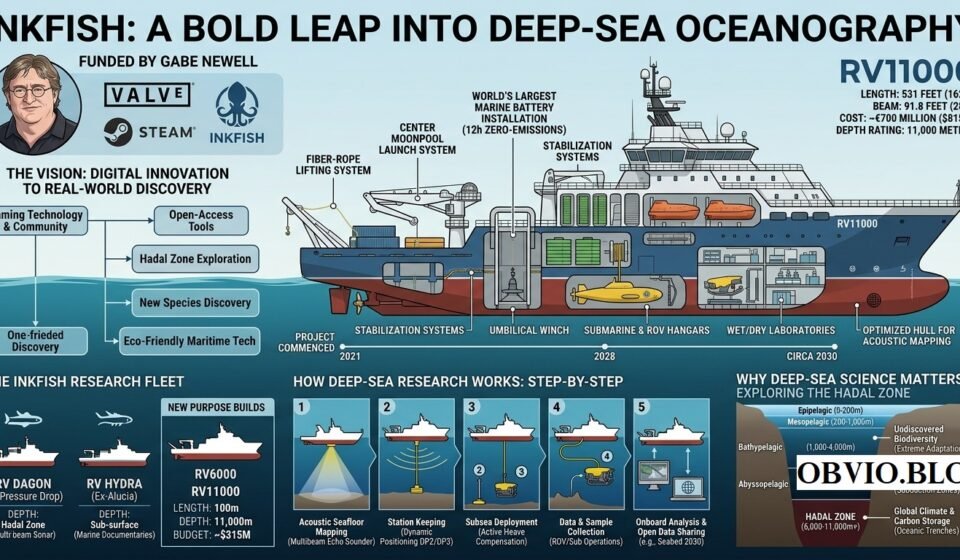
One of the projects of the businessman is gabe newell ocean research ship initiative that implies a number of ships. The centerpiece of the initiative is the custom-built mega-sized ocean research ship RV11000 that costs roughly €700 million ($815 million) and reaches 531 feet (162 meters) in length.
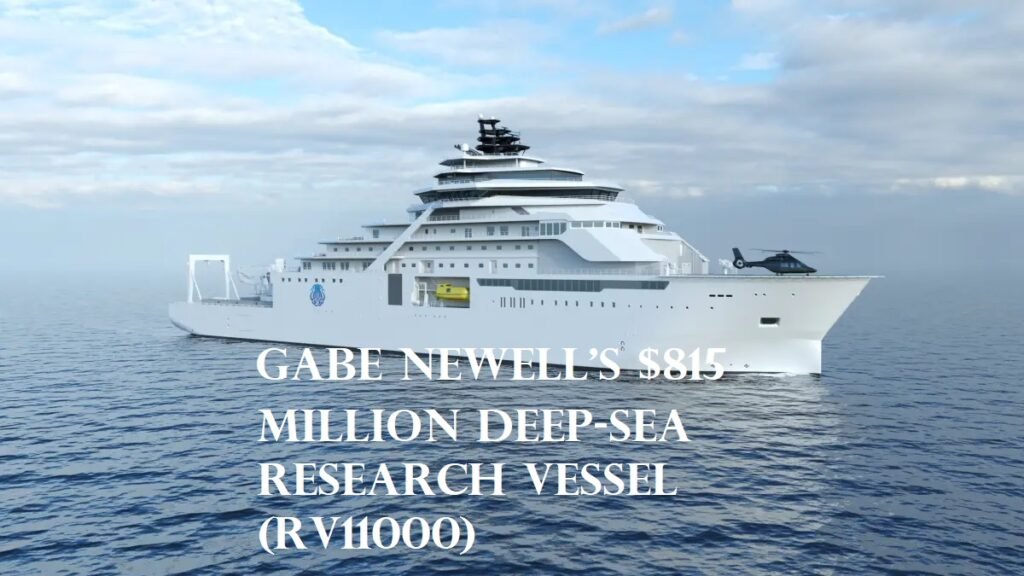
This paper will reveal everything about Newell’s marine science company, its new ship, its features, and why the ocean ship is important for future oceanography.
Who Is Gabe Newell and Why Is He Exploring the Deep Sea?
In order to have an idea of the capabilities of the gabe newell ocean research ship, it would be important to know the background of the man financing the project.
Gabe Newell made a lot of money when he left Microsoft to start his own Valve Corporation back in 1996. The company has changed the PC gaming industry by releasing such legendary video games as Half-Life, Portal and Counter-Strike.
  +-------------------------------------------------------------+
  |                      GABE NEWELL                            |
  |               (Co-Founder, Valve Corp)                      |
  +------------------------------+------------------------------+
                                 |
         +-----------------------+-----------------------+
         |                                               |
  Digital Media & Tech                           Marine Exploration
  - Valve Corporation                            - Inkfish (Founded 2021)
  - Steam Platform                               - Hadal Exploration Fleet
  - Starfish Neuroscience                        - RV6000 & RV11000 Ships
         +                                               +
         |                                               |
  Virtual Innovation                            Real-World Discovery
In 2021, Newell shifted a large part of his focus and efforts towards oceanography through the creation of Inkfish, a privately owned marine research and ocean exploration organization based in New Zealand.
Contrary to conventional superyachts which are created exclusively for luxurious purposes, Newell’s intentions through Inkfish lie with scientific discoveries. His objective is to:
- Create free access tools and platforms for marine scientists across the world.
- Survey unknown sections of the ocean bed, especially those in the Hadal region (below 6,000 meters).
- Identify new biological and geological species.
- Create deep-sea machinery and eco-friendly maritime technology.
Inside the RV11000: Specifications of the 531-Foot Megaship
The principal ship in this fleet is project-named RV11000. The name refers to its basic capabilities in terms of operation: working effectively at the bottom of the ocean, at depths up to 11,000 meters (or 36,000 feet), the lowest point of the Mariana Trench.
         RV11000 KEY METRICS AT A GLANCE
+-----------------------+---------------------------------------+
| Metric                | Value / Feature                       |
+-----------------------+---------------------------------------+
| Overall Length        | 531 feet (162 meters)                 |
| Beam (Width)          | 91.8 feet (28 meters)                 |
| Estimated Cost        | ~€700 million (~$815 million USD)     |
| Maximum Depth Rating  | 11,000 meters (36,089 feet)           |
| Primary Shipbuilder   | VARD (Fincantieri Group, Norway)      |
| Battery Installation  | World's largest marine battery system |
| Zero-Emission Time    | 12 hours on full battery power        |
| Expected Delivery     | Circa 2030                            |
+-----------------------+---------------------------------------+
Key Dimensions and Cost
Developed from the Norwegian shipyards VARD (which belongs to the Fincantieri Group) together with design firm YTMC, the RV11000 is a behemoth when it comes to engineering. At 162 meters long and 28 meters wide, the ship is even longer than one and a half football fields.
Valued at more than €700 million ($815 million), this ship was one of the largest private investments in civilian marine research ever made.
Hull Design and Stabilization
Operating in the open sea environment calls for stability, particularly while deploying multi-ton equipment in a turbulent sea. The RV11000 comes equipped with:
- An optimized hull design for high-resolution acoustic seabed mapping.
- A four active stabilization system that helps in reducing the motion of the vessel in a stormy sea.
- Dynamic positioning DP2 & DP3 capability.
Green Technology and Giant Battery Power
Another outstanding feature of this vessel is the footprint it leaves behind. The RV11000 will feature the largest marine battery pack that has ever been installed on any vessel.
The enormous battery packs will make it possible for the ship to sail for up to 12 hours on pure electricity without making any sound or emitting anything. Quiet sailing is important not only to save the environment but also to prevent disruptions to equipment used for acoustic research.
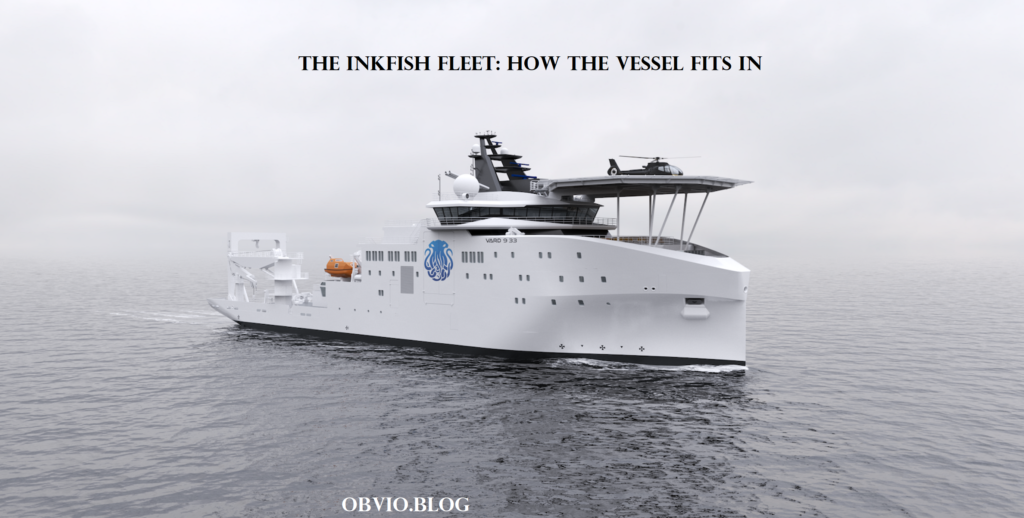
The Inkfish Fleet: How the Vessel Fits In
The RV11000 is not an isolated effort but one that forms part of the growing network of research efforts conducted by Newell’s Inkfish corporation. In order to understand the strategy of the gabe newell ocean research ship fleet, it would be important to consider the fleet as a whole.
                     THE INKFISH RESEARCH FLEET

   +--------------------+                     +--------------------+
   |      RV Dagon      |                     |      RV Hydra      |
   | (Ex-Pressure Drop) |                     |    (Ex-Alucia)     |
   | Depth: Hadal Zone  |                     | Depth: Sub-surface |
   +---------+----------+                     +---------+----------+
             |                                          |
             +--------------------+---------------------+
                                  |
                                  v
   +---------------------------------------------------------------+
   |                      NEW PURPOSE BUILDS                       |
   +------------------------------+--------------------------------+
                                  |
         +------------------------+------------------------+
         |                                                 |
         v                                                 v
  +--------------+                                  +--------------+
  |    RV6000    |                                  |   RV11000    |
  | 100 meters   |                                  | 162 meters   |
  | ~$300M cost  |                                  | ~$815M cost  |
  | Depth: 6,000m|                                  | Depth: 11,000m|
  | Delivery 2028|                                  | Delivery 2030|
  +--------------+                                  +--------------+
1. Existing Assets: RV Dagon & RV Hydra
In 2022, Inkfish purchased the Hadal Exploration System from Victor Vescovo, a celebrated deep-sea explorer. This purchase comprised the following vessels:
- RV Dagon (formerly Pressure Drop): An exclusive support vessel featuring multibeam sonar used for ocean mapping purposes.
- DSV Bakunawa (formerly DSV Limiting Factor): A two-man submersible authorized for regular submersions at the full ocean depth of 11,000 meters.
- RV Hydra (formerly Alucia): An acclaimed 56-meter research vessel extensively employed in marine documentary films.
2. RV6000: The $300 Million Predecessor
Prior to the launching of the RV11000 into the sea. Inkfish is expected to acquire RV6000 during the middle of 2028.
- Size: 100 meters (328 feet).
- Cost: ~$300 million USD.
- Capacity: Can house 70 persons including scientists and crew on long ocean journeys.
- Depth Capacity: 6,000 meters.
The machineries and the handling devices on board the RV6000. Which were designed by Norwegian company, Seaonics, are used
Key Hardware and Technologies Onboard
Using heavy machinery six miles straight down in total darkness involves specific engineering. The RV11000 comes fitted with special systems engineered to operate in such harsh conditions of the sea ocean:
1. Ultra-Deep Winches and Umbilicals
- 12,000 Meter Umbilical Winch: This flexible control cable that is positioned below the deck helps to lift and communicate with ROVs to depths up to 11,000 meters.
- 15,000 Meter Fiber Rope Lifting System: Fiber rope gives more strength for lifting and lowering heavy oceanic payloads compared to steel cable and at much lesser weight.
2. Submarine and ROV Hangars
- Two Submarine Hangar: This is an environmentally controlled interior area used for storing, maintaining, and equipping two manned submersibles.
- Moon Pool Launch System: The ship incorporates a moon pool which is an opening on the underside of the hull that enables launching of ROVs and equipment directly into the water without being affected by any wave actions.
- Stem A-Frame and Side Crane: There is a robust stem A-frame for handling the submarine launches and recoveries at the stern of the ship along with a side active heave compensation crane up to a depth of 2,500 meters.
3. Sampling and Analytical Systems
- 40-Meter Core Sampling System: This is used by scientists for taking long core samples from the bottom of the sea to investigate past climates and biological activities.
- CTD Rosette Array: These are highly accurate instruments that measure Conductivity (for salinity measurement), Temperature and Depth (pressure).
- Wet/Dry Onboard Scientific Laboratories: These are laboratories which allow marine biologists, oceanographers, and geologists to analyze their samples right away.
How Deep-Sea Research Operations Work: Step-by-Step
Knowing the operations of an aircraft such as the RV11000 during a live expedition gives us the sense of technical difficulty that goes into studying the depths of the ocean. This is how a deep sea exploration process is done:
+------------------------------------------------------------------+
| STEP 1: ACOUSTIC SEAFLOOR MAPPING                                |
| High-resolution multibeam sonar maps seabed topography.          |
+--------------------------------+---------------------------------+
                                 |
                                 v
+------------------------------------------------------------------+
| STEP 2: DYNAMIC POSITIONING & STATION KEEPING                    |
| Automated thrusters hold vessel position over target coordinates.|
+--------------------------------+---------------------------------+
                                 |
                                 v
+------------------------------------------------------------------+
| STEP 3: SUBSEA DEPLOYMENT                                        |
| Active heave compensation lowers ROV/Sub through wave zone.      |
+--------------------------------+---------------------------------+
                                 |
                                 v
+------------------------------------------------------------------+
| STEP 4: DATA & SAMPLE COLLECTION                                 |
| 40m cores, CTD casts, HD video capture, and organism sampling.   |
+--------------------------------+---------------------------------+
                                 |
                                 v
+------------------------------------------------------------------+
| STEP 5: ONBOARD ANALYSIS & OPEN DATA SHARING                     |
| Lab processing followed by public open-access data release.       |
+------------------------------------------------------------------+
Step 1: High-Resolution Acoustic Seafloor Mapping
Prior to deploying the manned submersible or expensive ROV. The vessel employs a multibeam echosounder that is mounted in the hull to create 3D topographical maps of oceanic trench areas.
Step 2: Station Keeping via Dynamic Positioning
When a target site is located, the boat locks itself at that position using GPS and dynamic positioning thrusters. Regardless of how tumultuous the water conditions may be, the computerized propulsion system keeps the boat stationary at a particular point in the ocean.
Step 3: Deployment Through the Wave Zone
Putting equipment into the ocean involves certain hazards because of wave motion. There is an active heave compensation system in the handling equipment of the ship. Smart winches release or retrieve cables depending on the movement of the ship so that the equipment remains stable when it crosses the waves.
Step 4: Descent and Hadal Zone Operations
The submersible or ROV travels through the water column until reaching the abyssal or hadal regions. Upon arriving at the bottom, the following activities take place:
- Native organisms are filmed using high-definition cameras.
- Robotic arms retrieve samples of rocks, water, and biological organisms.
- Core tubes are forced into the sediment of the sea floor.
Step 5: Onboard Processing and Open Data Release
Samples will be taken to the laboratories on board the submarines once they resurface into the hangar. Importantly, Inkfish ensures that its oceanographic data is made open-access. Results are posted on the international database such as Seabed 2030 to help out the researchers internationally.
Why Deep-Sea Science Matters: Exploring the Hadal Zone
Less than 25% of the Earth’s sea bottom has been charted using high resolution sonar. The Hadal zone is an area within the ocean that lies deeper than 6,000 meters (19,685 feet).
                     OCEAN DEPTH ZONES (METERS)

       0 m  +---------------------------------------+
            |  Epipelagic (Sunlight Zone)           |
     200 m  +---------------------------------------+
            |  Mesopelagic (Twilight Zone)          |
   1,000 m  +---------------------------------------+
            |  Bathypelagic (Midnight Zone)         |
   4,000 m  +---------------------------------------+
            |  Abyssopelagic (The Abyss)            |
   6,000 m  +---------------------------------------+
            |                                       |
            |  HADAL ZONE (Ocean Trenches)          |
            |  Target operational zone for RV11000  |
            |                                       |
  11,000 m  +---------------------------------------+  <-- Challenger Deep
The gabe newell ocean research vessel project focuses on a variety of important scientific areas:
- Undiscovered Biodiversity: Life forms that exist deep inside the oceans thrive under conditions of high pressure without any access to sunlight. Their discovery offers clues to biological, biochemical processes, and life in extreme conditions.
- Geological Phenomena and Tsunamis: The ocean trenches are subduction zones, where two tectonic plates meet. It provides better knowledge for predicting earthquakes and tsunamis.
- Global Climate Models and Carbon Storage: The sediments of the ocean floor contain huge amounts of carbon. Its dynamics within the ocean trench could help develop global climate models.
Comparison: RV11000 vs. Traditional Research Vessels
To emphasize the special purpose of this ship, we will analyze the technical features of the RV11000 and compare them with those of regular scientific vessels and recreational sailing yachts used for exploration purposes.
| Feature / Capability | RV11000 (Inkfish / Gabe Newell) | Standard Academic Research Vessel | Standard Exploration Superyacht |
| Overall Length | 162 meters (531 feet) | 60–90 meters (196–295 feet) | 70–100 meters (230–328 feet) |
| Primary Focus | Ultra-deep marine research | Regional/coastal oceanography | Luxury cruising & light diving |
| Max Depth Capability | 11,000 meters | 2,000–4,000 meters | 300–1,000 meters |
| Submarine Capability | Dual deep-sea submarine hangar | Rarely equipped for manned subs | Small tender/sub launch |
| Battery Installation | World’s largest (12h zero emissions) | Small auxiliary battery systems | Standard diesel generators |
| Data Policy | Open-source public sharing | Academic publishing | Private / Owner only |
| Estimated Budget | ~$815 Million USD (€700M) | $50M – $150M USD | $100M – $300M USD |
What People Search for: FAQs About Gabe Newell’s Research Ship
In light of the revelation about the gabe newell ocean research ship project. There were many questions that were asked by gamers and oceanographers alike regarding this project.
FAQ 1: Why is Gabe Newell funding a deep-sea research ship instead of video games?
While Newell continues to work for Valve Corporation, the past few years have seen him dedicating a lot of time to his philanthropic and scientific pursuits. Apart from starting up Starfish Neuroscience, which works on brain computer interfaces, Newell set up Inkfish in an attempt to address one of mankind’s greatest scientific mysteries – the deep sea.
FAQ 2: When will the RV11000 be operational?
The construction of the RV11000 is ongoing in the shipyard in VARD, Norway, and the ship will be delivered in 2030. Nonetheless, Inkfish’s RV6000, which is 100 meters shorter than the RV11000, will
FAQ 3: How much total money is Gabe Newell spending on these ships?
The overall expense of just building the units is mind-boggling:
- RV6000: Around $300 million USD (€275 million).
- RV11000: Around €700 million ($815 million USD).
- Added to that is the purchase price of the Hadal Exploration System fleet, bringing Newell’s commitment to marine exploration beyond $1.1 billion USD.
FAQ 4: Can independent scientists apply to use the ship?
Yes. Inkfish is a philanthropic scientific organization that collaborates with scientific research institutions, universities, and marine organizations across the world to offer scientists, who do not have access to costly deep-sea technologies, ship time, ROVs, and submersibles.
FAQ 5: Is this vessel related to any Valve video games?
No. Even though the gaming community often cracks jokes about looking for Half-Life 3 at the bottom of the Mariana Trench, Inkfish is a separate scientific body. It functions independently from the game development processes of Valve Corporation.
Conclusion: A Major Boost for Deep-Ocean Science
Gabe Newell’s venture into marine exploration is certainly one of the greatest game changers that will come about in terms of financing of ocean sciences. While state-supported scientific vessels often operate under strict budgetary constraints and other logistical problems, philanthropic financing offers greater freedom for innovation and tailor-made vessels.
Equipped with an impressive 531 feet long body, the ability to reach depths of up to 11,000 meters, the largest battery pack ever installed in a vessel and the open-source model of data sharing, the RV11000 is bound to change the way research of the deepest parts of the ocean is conducted.