
Digital marketing has been established as the pillar of contemporary business practices. Irrespective of whether you are an entrepreneur, the owner of an existing firm, or a creator of a brand for yourself, digital marketing will assist you to connect with the desired target market, gain more exposure, and promote your business online.
Digital marketing is a completely different concept compared to conventional marketing because it enables businesses to interact with their target customers using websites, search engines, social media platforms, e-mails, mobile applications, and AI platforms.
This guide will equip you with all that you require to know concerning digital marketing, including its components and benefits for businesses in 2026.
What Is Digital Marketing?
It refers to the marketing of goods, services, and brands using digital channels like search engines, websites, social media, emails, online advertisements, and mobile applications.
The main purpose of digital marketing is to attract potential clients, build relationships, create leads, and eventually make more sales via the internet.
Why Is Digital Marketing Important?
There are billions of people surfing the internet on a daily basis; therefore, it is one of the most efficient methods of reaching out to customers.
Benefits of Digital Marketing
- Reach a global audience.
- Build brand awareness.
- Increase website traffic.
- Generate quality leads.
- Improve customer engagement.
- Track campaign performance.
- Achieve higher return on investment (ROI).
Main Types of Digital Marketing
1. Search Engine Optimization (SEO)
SEO assists in making your website visible on the Internet via the use of search engines like Google by optimizing the content, keywords, loading speed, and the website itself.
SEO Benefits
- Free organic traffic
- Better search rankings
- Increased credibility
- Long-term growth
2. Content Marketing
Content marketing focuses on producing high-quality content that provides education, entertainment, and solutions to your target audience.
Popular Content Formats
- Blog Posts
- Articles
- Videos
- eBooks
- Infographics
- Case Studies
3. Social Media Marketing
Social media makes it possible for businesses to connect with their customers and form communities online.
Popular Platforms
- TikTok
- X (Twitter)
- YouTube
4. Email Marketing
With email marketing, firms are able to reach their customers directly using newsletters, product updates, and promotion campaigns.
Advantages
- Personalized communication
- High customer retention
- Better conversion rates
- Cost-effective marketing
5. Pay-Per-Click (PPC) Advertising
PPC advertising helps organizations show their advertisements on search engines and social media networks while making payments only when users click on the advertisement.
This is fast and easy to measure.
6. Affiliate Marketing
Affiliate marketing includes working with people or companies that advertise your product in return for a commission on their sale.
7. Influencer Marketing
The companies team up with the content providers and influencers for creating brand awareness among the targeted audience.
The Role of AI in Digital Marketing
Through artificial intelligence, marketers have been able to automate their processes and analyze customers’ behavior in order to enhance campaign effectiveness.
AI Applications
- Content creation
- Customer support chatbots
- Personalized recommendations
- Marketing automation
- Audience analysis
- Predictive analytics
AI allows companies to be more efficient and provide a better customer experience.
Essential Digital Marketing Skills
Successful digital marketers should develop skills in:
- SEO
- Content Writing
- Social Media Marketing
- Email Marketing
- Copywriting
- Graphic Design
- Video Marketing
- AI Tools
- Data Analytics
- Communication
Best Practices for Success
To build an effective digital marketing strategy:
- Understand your target audience.
- Create high-quality content.
- Optimize your website for search engines.
- Stay active on social media.
- Build an email list.
- Track campaign performance.
- Keep learning new marketing trends.
Common Mistakes to Avoid
Many businesses struggle because they:
- Ignore SEO.
- Publish inconsistent content.
- Target the wrong audience.
- Focus only on selling.
- Ignore website analytics.
- Fail to update old content.
Avoiding such mistakes can be highly beneficial for the future.
Future of Digital Marketing
The evolution of digital marketing will not stop along with advancements in technology.
Key trends shaping the future include:
- Artificial Intelligence (AI)
- Voice Search
- Video-First Marketing
- Personalized Experiences
- Marketing Automation
- Interactive Content
- Data-Driven Decision Making
Those organizations which adopt such changes will continue being successful in the era of digital marketing.
What is a Digital Marketer
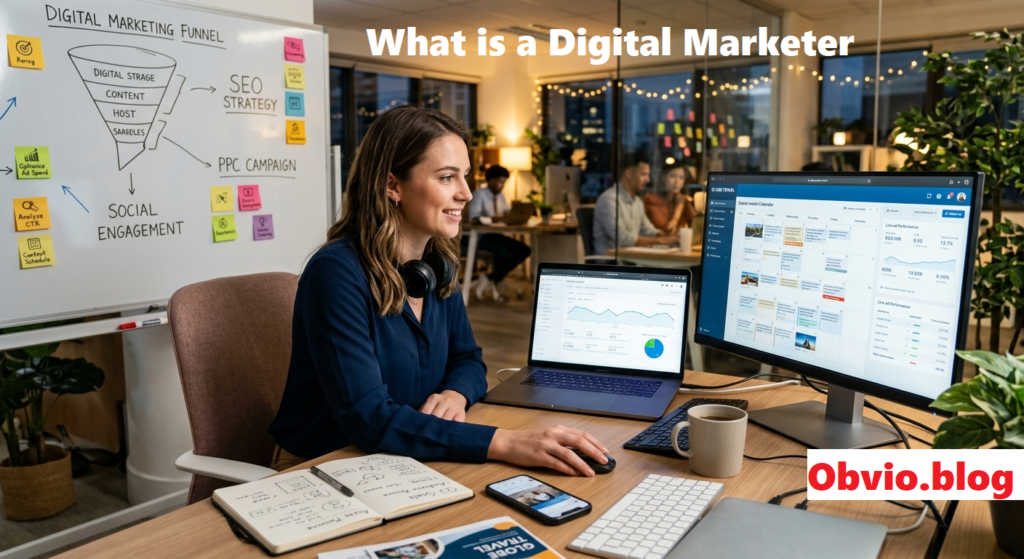
Digital marketing is the job title for someone who uses various digital mediums to advertise brands, products, or services to their target audience. It differs from conventional marketing, where the focus is on advertising through means such as newspapers, television commercials, and billboards. Digital marketing makes use of digital media platforms to carry out advertising, such as search engines, social media sites, emails, and website. The main objective for any digital marketer is to create awareness for their brand and increase sales through various techniques. They are creative as well as analytical, since they need to test out various advertising methods to see which one works the best.
The work done by a digital marketer encompasses a number of diverse areas of specialization, including Search Engine Optimization (SEO), Content Marketing, Social Media Marketing, and Pay-Per-Click (PPC) Advertising. They make use of various analytics tools to measure the results of their work based on factors such as traffic and return on investment (ROI). Given the dynamic nature of both online consumer behavior and the ever-evolving nature of digital algorithms, digital marketers have to constantly update their skills.
Conclusion
In the present-day highly interconnected world, digital marketing cannot be considered as merely an option anymore; this type of marketing has become a crucial element in growing any business. There are various ways of attracting customers using digital marketing, such as SEO marketing, content marketing, social media, email marketing, and many more.
Anyone who wants to build a career and be successful in the future should consider getting acquainted with digital marketing in detail. There are numerous opportunities and benefits that can come with digital marketing.