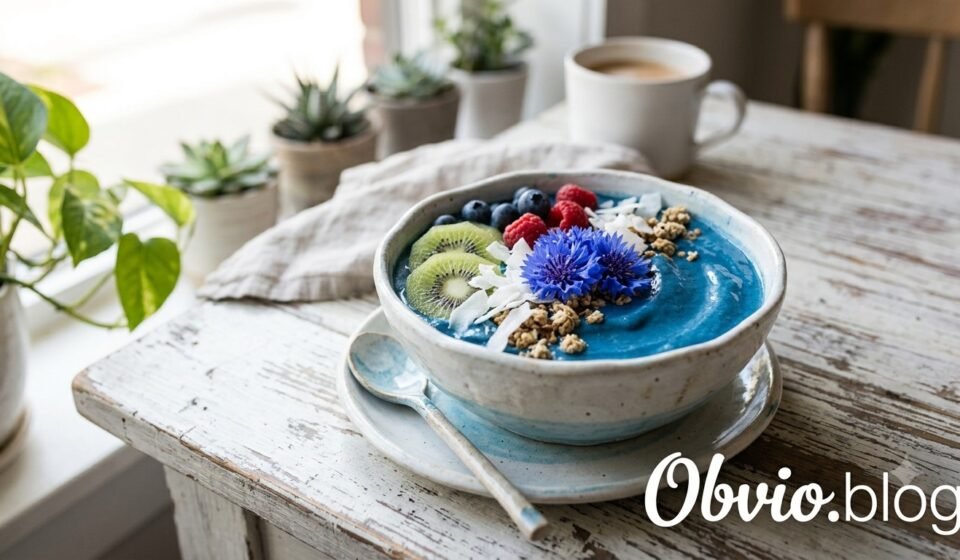

In the last few years, the popularity of blue smoothie bowls, ocean-inspired lattes, and blue baking foods on social media and in health food cafes has skyrocketed. But how can one achieve such an electric color? The answer is – blue spirulina.
As we all know, traditional green algae dietary supplements have been around for ages; however, this blue-colored extract contains all the same advantages but with no strong seaweed taste which discourages many people from using it. But what is this unique superfood? How does it originate? Is blue spirulina good for you?
Find all the answers to these questions in our comprehensive article where we will discuss the health benefits, taste properties, and uses of blue spirulina powder.
What is Blue Spirulina?
To understand what is blue spirulina you must first understand its predecessor. That is green spirulina.
Spirulina (Arthrospira) is a blue-green alga that occurs naturally in warm, alkaline lakes and in tropical areas. It is of the genus cyanobacteria . Biomass is dried algae , which can be used for food for humans and animals. Humans have harvested spirulina for many years; for example, Aztecs harvested this alga from the lake of Texcoco in Mexico to make energy cakes. In the modern era, spirulina gained popularity due to the fact that it was used as a food supplement by NASA for astronauts because of its
vitamins and proteins beyond imagination.
Phycocyanin extract that has been purified from spirulina algae.
But in its natural form, spirulina is dark blue-green in color with an intense, fishy flavor due to its chlorophyll.
The blue spirulina is the purified phycocyanin pigment taken out from spirulina algae. It is a protein-bound pigment found in the blue-green algae and gives the blue-green color to it. The electric-blue powder is obtained after purifying the chlorophyll and other vegetable material through water extraction process.
How Is Blue Spirulina Powder Made?
Steps of processing fresh biomass into blue spirulina powder include several crucial stages to retain nutritional value and bright coloration of the compound:
- Culture: Microscopic Arthrospira platensis algae are cultured in a very controlled environment in pure freshwater ponds with an abundance of sunlight.
- Harvest & Filtration: Spirulina biomass is filtered out of water through a fine screen and washed with pure water.
- Extraction: Aquatic extractions are used to lyse algae cells and extract water-soluble phycocyanin protein.
- Isolation: High-speed centrifugation is performed to isolate blue solution of phycocyanin from green chlorophyll and cell membranes.
- Drying & Packaging: Blue solution of phycocyanin is dried under low temperatures and processed into bright blue powder.
What Does Blue Spirulina Taste Like?
The most challenging aspect of using the green spirulina for anyone is the unique swampy taste that it has. What people always tend to wonder is: what does blue spirulina taste like?
The best thing about the blue spirulina is that it has zero taste or odor.
This is because the chlorophyll and the heavy mineral elements responsible for the fishy smell in the algae have already been removed in the process of extraction. Hence, blue phycocyanin extract tastes neutral. Even in the best-case situation, there is just a slight taste of protein which will not be felt at all when added to lemonade, smoothies, or yogurt.
It is the fact that it tastes neutral that makes it appealing to chefs, bakers, and other food lovers who want to improve the visual appeal of their dishes without altering the taste of their dishes.
What Does Blue Spirulina Do? Health & Wellness Benefits
Apart from its attractive color, what does blue spirulina do to your body?
It is because of its strength that consumption of phycocyanin regularly will guarantee that you benefit from many health advantages. It is because of its properties that scientists have done thorough research on phycocyanin.
1. Powerful Antioxidant Defense
Free radicals are harmful chemicals which damage cell structures, leading to premature aging and inflammation. Phycocyanin is one of the most powerful natural anti-oxidants. It cleanses the body of free radicals and prevents the formation of inflammatory chemicals.
2. Supports Immunity and Cellular Protection
Phycocyanin enhances the production and activity of white blood cells such as NK cells and lymphocytes. Therefore, thanks to phycocyanin, your immune system will be able to protect you from various diseases and infections.
3. Promotes Brain and Cognitive Health
The oxidative stress occurring in brain causes mental fatigue, loss of concentration and cognitive decline. Scientific evidence shows that Phycocyanin can easily pass the blood-brain barrier and reduce neuro-inflammation, causing an improvement in mental clarity and focusing.
4. Boosts Energy and Exercise Recovery
Phycocyanin helps in decreasing oxidative stress and muscle inflammation caused by exercise. In addition to that, proteins found in spirulina provide essential amino acids required for recovery of tissues.
5. Supports Heart and Blood Health
In the terms of maintaining healthy levels of cholesterol. Phycoyanin has been found to help slow the oxidation of low density lipoproteins (LDL). While at the same time it promotes the production of nitric oxide, which is helpful in relaxing blood vessels.
Blue Spirulina vs. Green Spirulina: Key Differences
Although the two substances come from the same microalgae species, they are very dissimilar in terms of chemistry and nutrients.
| Feature | Blue Spirulina | Green Spirulina |
|---|---|---|
| Main Component | Pure Phycocyanin Extract | Whole Algae Biomass |
| Color | Bright Electric Blue | Dark Green / Teal |
| Taste & Aroma | Neutral, virtually tasteless | Fishy, earthy, ocean-like |
| Primary Nutrients | Phycocyanin, Protein, Antioxidants | Chlorophyll, Iron, B-Vitamins, Beta-Carotene, Protein |
| Best Used For | Aesthetics, smooth flavor, targeted antioxidant support | Comprehensive daily multivitamin replacement |
| Solubility | Highly water-soluble | Suspends in liquid, leaves grit |
Is Blue Spirulina Good for You?
And the brief answer is “yes” – Is Blue Spirulina Good For You coming from trusted sources?
The reason why it is good for you is that this is a natural extract of protein containing beneficial antioxidants. Thus, this will help fight inflammation inside your body.
A vibrant ocean smoothie bowl made using blue spirulina powder.
Dosage Guidelines
The appropriate daily intake of blue spirulina powder for most healthy adults should be:
- Beginners: 0.5 to 1 gram (approx. 1/4 to 1/2 teaspoon)
- Regular Users: 1 to 2 grams per day
Since the phycocyanin pigment is highly concentrated. Just a trace (1/4 teaspoon) will be enough to change the entire contents of a blender into a deep blue shade.
Potential Side Effects & Safety Precautions
Though usually classified as being GRAS (Generally Recognized As Safe):
- Heavy Metals and Contamination: Like all aquatic plants, algae may absorb heavy metals/toxins if grown in polluted water sources. Make sure to buy only those products that have been tested by third-party laboratories.
- Autoimmune Disorders: Since phycocyanin increases immune activity, people with autoimmune disorders like lupus, rheumatoid arthritis, or multiple sclerosis should consult their physicians prior to consuming it.
- Phenylketonuria (PKU): The spirulina contains the amino acid phenylalanine. Which should be excluded from diet by patients with Phenylketonuria.
- Pregnancy & Nursing: As little research is available on its impact on pregnant women. Also consult your healthcare provider before consumption.
How to Use Blue Spirulina Powder in Your Daily Diet
The inclusion of blue spirulina powder in your cooking or baking schedule is simple since it does not contain any taste and dissolves easily in cold substances.
- Choose Cold or Room Temperature Base Ingredients:
Exposure to heat eliminates antioxidants phycocyanin and also makes the color fade to blue.
Choose cold beverages such as almond milk, coconut water, Greek yogurt, or frozen bananas. Refrain from heating blue spirulina above 140∘F (60∘C).
- Measure a Small Amount:
A little bit goes a long way.
Use 1/2 tsp (1 gram) of pure powder per serving. Add directly to your blender, shaker bottle, or mixing container.
- Blend or Whisk Thoroughly:
Keep the texture smooth and free from lumps.
Mix with whatever fruit you fancy (light-colored fruits such as banana, mango, pineapple, and peach will give the brightest blue color). When stirring in liquids like lemonade or milk, use a hand frother or whisk to dissolve fully.
- Top and Serve Immediately:
Drink immediately after making.
Add to a glass or bowl, then top with some chia seeds, coconut shreds, or fresh blueberries, and you’re ready to drink your healthy masterpiece!
3 Quick Recipe Ideas
- Ocean Breeze Smoothie Bowl: Blend 2 frozen bananas, 1/2 cup frozen mango, 1/4 cup coconut milk, and 1/2 tsp blue spirulina in a blender until smooth and thick. Top with blueberries and shredded coconut.
- Blue Cloud Latte: Mix 1/2 tsp blue spirulina with 2 tbsp warm (not hot) water and 1 tbsp of maple syrup in a small bowl until dissolved. Pour it over the iced oat milk in a glass.
- Hydrating Mermaid Lemonade: Mix the juice of 1 lemon, 2 cups of cold water, 1 tbsp of agave nectar, and 1/4 tsp of blue spirulina together. Serve chilled over ice.
Frequently Asked Questions (FAQs)
Does blue spirulina contain iodine?
While seaweed found in the ocean has some iodine (like kelp or nori). Blue spirulina is commonly cultivated in fresh water ponds. By, the blue spirulina powder thus has very little amounts of iodine, which makes it perfect for individuals who have discuss regarding their iodine intake.
Can children consume blue spirulina?
Yes, as a replacement for blue food coloring used in small amounts of food (e.g., 1/4 tsp in a smoothie), blue spirulina is safe for children’s consumption. But it would be best first to seek your doctor’s thoughts on the matter.
Why is blue spirulina more expensive than green spirulina?
The extraction and purification of phycoyanin from blue spirulina involve many steps, and it is a rather difficult procedure. The reason for this difficulty is that the amount of raw material needed to get some phycocyanin is relatively high.
Will blue spirulina stain my teeth or tongue?
The use of highly concentrated blue drinks can lead to light bluish discoloration of the tongue. But this goes away as soon as you rinse your mouth with water. The tongue doesn’t get stained as compared to turmeric and beetroot stains.
Conclusion
Not only is blue spirulina not a fleeting social media fad. The pure form of phycocyanin from regular spirulina is a superfood packed full of antioxidants, immunity, and anti-inflammatories. All contained within an electrifying blue color without the slightest hint of seafood taste.
If you wish to ditch artificial coloring from your pantry, improve your post-gym regimen, or just jazz up your smoothies in the morning, the power of blue spirulina powder will meet your needs.