
Introduction
One of the key skills that people use on a daily basis is interpersonal communication. No matter if you talk with your family member, colleague at work, customer, or a new person, communication is the means with which you can exchange information and expectations.
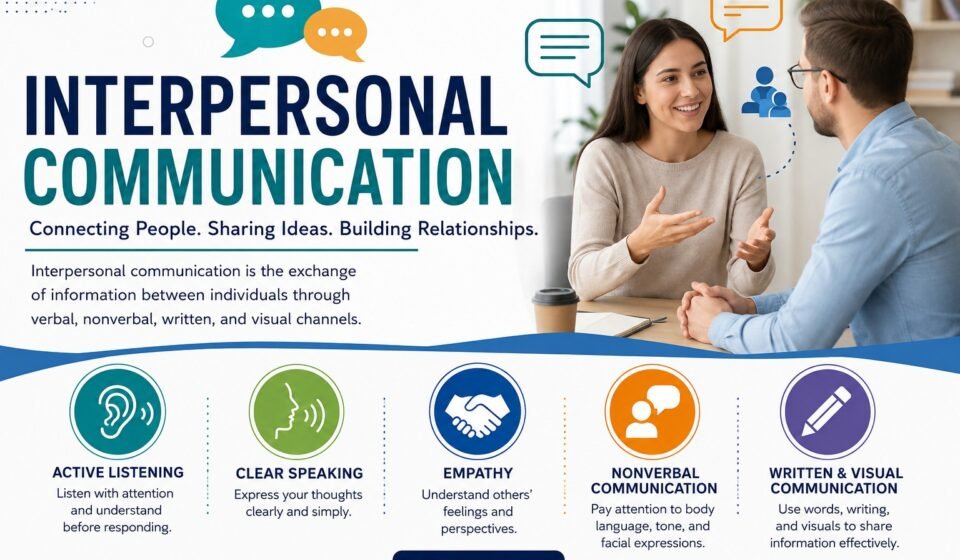
Interpersonal communication can be described as an exchange of information between individuals by using various modes of communication, which are verbal, non-verbal, written, and visual ones. Communication is not only spoken dialogue; it can be expressed by gestures, facial expressions, tone of voice, e-mails, text messages, etc.
Effective communication will enable you to develop healthy relationships, prevent conflicts, and solve problems. This article describes the concept of interpersonal communication, its types and importance, and neccessary skills to communicate with others successfully.
What Is Interpersonal Communication?
If you have been asking yourself what is interpersonal communication, it can be explained as a communication process whereby there is an exchange of information, feelings, thoughts and meaning between two or more persons.
This can either be face-to-face or via communication devices such as telephone, emails, chatting programs and video telephony. This can either be formal where the communication occurs between a superior and a subordinate, such as a boss and his/her employee, or it can be informal, where friends chat.
For instance, if a teacher is giving his/her teachings to students, there is involvement of interpersonal communication where the teacher communicates to the learner.
Interpersonal Communication Definition
The definition of interpersonal communication stresses the process of exchanging information and meaning between people. Information and meaning can be exchanged through verbal and non-verbal messages.
Verbal communication refers to the words used when people speak and write. Non-verbal communication refers to such elements as facial expressions, body language, eye contact, and many others.
Communication occurs effectively when the intended message is comprehended correctly. Communication failure occurs when the message is not understood properly due to certain factors.
Define Interpersonal Communication in Simple Words
Interpersonal communication can be defined as the means by which individuals communicate with one another to exchange ideas, feelings, develop relationships, and comprehend each other.
An example is when people discuss issues at work. When an individual explains a situation to their boss, who listens, asks questions, and offers solutions, that constitutes interpersonal communication.
The process goes beyond just communicating. Individuals need to listen, contextualize, identify emotions, and respond to them.
Main Types of Interpersonal Communication
Interpersonal communication may have several types based on the specific circumstances and modes of communication.
1. Verbal Communication
Verbal communication is when words are used to convey information. Typical examples include conversation, meeting, interview, presentation, and phone call.
Effective verbal communication requires proper and suitable language to be used by the speaker considering the listener’s level of understanding, feelings, and expectations.
2. Nonverbal Communication
Nonverbal communication is sending a message without completely depending on words. These include:
- Facial expressions
- Eye contact
- Gestures using hands
- Body position
- Distance from each other
- Voice tone
- Head movements
- Body language in general
In some cases, the non-verbal message can carry more meaning than the verbal one. For instance, one may verbally express his/her comfort but the facial expression shows otherwise.
3. Written Communication
Types of written communication include emails, letters, text messages, reports, notes, and messages via the Internet.
It is even more important to have good written communication in a professional setting since it leaves a written record of information. Good writing must be clear, concise, and organized.
4. Visual Communication
Communication through visuals employs the use of pictures, symbols, diagrams, charts, videos, among others to pass across information.
For instance, a company may use an infographic to communicate complex information to its clients or employees.
Why Is Interpersonal Communication Important?
StrEffective communication plays an important role in personal as well as professional life. This assists individuals in understanding one another and moving forward towards common goals.
These are some of the advantages of communication:
- Development of strong relationships
- Enhancing teamwork
- Avoiding misunderstandings
- Resolving conflicts
- Transmitting information effectively
- Developing mutual trust
- Effective decision making
- Building good customer relations
- Establishing a good workplace atmosphere
By communicating effectively and respectfully, individuals can gain knowledge about various perspectives and can easily resolve issues.
Essential Interpersonal Communication Skills
The cultivation of good interpersonal communication skills calls for practice. Good interpersonal skills assist individuals not only in communicating effectively but also in understanding the needs and feelings of others.
Active Listening
Active listening is being attentive to another individual rather than waiting for your opportunity to speak.
Good active listening entails:
- Eye contact when appropriate
- No unnecessary interruptions
- Asking relevant questions
- Being aware of non-verbal cues
- Summarizing key points
- Delineating understanding of the speaker
Clear Speaking
Effective communication requires presenting thoughts in an easy manner. Do not use any terms which are beyond the scope of comprehension of other individuals when conversing with them.
Think about the communication goals that one is aiming for prior to starting. Outline the central theme and give supportive facts where necessary.
Empathy
Empathy involves trying to understand the other person’s feelings and point of view.
It is not necessary that you always have to agree with the other person to demonstrate empathy. It is possible to understand the other person’s emotions and speak to him/her with respect.
For instance, “I understand that this situation is very frustrating for you.”
Emotional Awareness
Emotions can significantly impact communication. Fear, anger, stress, or even excitement can have an effect on how people communicate with one another.
By being aware of your emotions, you will be able to decide on how to respond.
Conflict Resolution
Differences of opinion are normal in relationships and at work. Good communicators always concentrate on resolving the issue rather than making an attack on a person’s personality.
Effective methods are:
- Hearing out both sides of the story
- Pinpointing the core issue
- Staying away from criticizing
- Searching for points of agreement
- Considering solutions
- Reaching an agreement on the next course of action
How to Improve Interpersonal Communication
Better communication cannot be achieved suddenly; it needs practice and awareness of oneself.
Step 1: Listen Before Responding
Make sure that you give the other party enough time to express his/her point.
Step 2: Use Clear Language
Do not prepare your reply before he/she finishes talking. Use words that can easily be understood by the audience.
Step 3: Pay Attention to Nonverbal Signals
Note the facial expressions, body language, gestures, and tone of voice. They may help to get extra information on how people feel.
Step 4: Ask Questions
Asking questions will help you avoid misinterpretations and show your real interest in the conversation.
Rather than guessing what is meant by something, make sure to clarify it.
Step 5: Control Your Reactions
In times of difficult conversations, give time before responding. Responding with calmness is always better than reacting emotionally to the situation.
Step 6: Ask for Feedback
Talk to colleagues, friends, or relatives about how well your communication style is. This way, you will get useful feedback regarding your communication style.
Common Barriers to Interpersonal Communication
Despite good intentions of people for effective communication, various barriers may get in the way of successful communication.
Poor Listening
An individual who is distracted and interrupts constantly will miss essential information.
Language Differences
The use of different languages, vocabularies, accents, and jargon may cause misunderstanding.
Emotional Barriers
Stress, anger, anxiety, or fear can affect how a person gives or receives a message.
Assumptions
To assume what someone else is thinking or feeling without even asking can cause misunderstandings.
Digital Distractions
Distractions like phones, notifications, social media, and others can decrease attention during conversations.
Understanding these barriers is the first step in addressing them.
Interpersonal Communication in the Workplace
Effective communication is very important for being successful in any profession. Employees have to interact with their bosses, colleagues, customers, suppliers, and others.
Effective communication at work may be used to:
- Co-ordinate work
- Allocate duties
- Exchange feedback
- Settle disputes
- Meet deadlines
- Boost productivity
- Create professional contacts
A good manager should have excellent communication skills since they have to set goals and motivate staff constantly.
Examples of Interpersonal Communication
There are a number of instances in daily life.
Some instances include:
- Feedback from a manager to an employee
- Talk between two colleagues regarding a project
- Information given by a doctor to a patient
- Conversation between a customer and a support executive
- Talk between parents and their children
- Discussion between friends about some personal matter
- Answering a student’s question by a teacher
- Negotiation between two business executives
In all cases, people exchange messages while decoding verbal and non-verbal messages.
What Is Interpersonal Communication Compared With Other Communication?
Interpersonal communication mainly deals with communication between individuals, whereas mass communication usually entails sending messages to many people using mediums like television, newspapers, websites, and social media.
For instance, a personal discussion between two staff members is interpersonal communication, whereas a corporate message to thousands of clients is mass communication.
This is the main distinction between interpersonal and mass communication.
FAQs About Interpersonal Communication
What is interpersonal communication?
It is the process whereby people interact with each other by conveying information, ideas, emotions, and meanings via verbal and non-verbal forms of communication.
Why is interpersonal communication important?
It enables people to form relationships, understand each other, exchange information, solve problems, resolve conflicts, and collaborate effectively.
What are the main interpersonal communication skills?
Some of the important skills are active listening, effective communication, empathy, emotional intelligence, non-verbal communication, questioning, feedback and conflict resolution.
What are examples of interpersonal communication?
Some examples are conversations with friends, workplace discussions, customer service, interview discussions, group meetings, classroom discussions, and family discussions.
How can I improve my communication skills?
Begin by being a good listener, clear speaker, questioner, observant of body language, controlled emotionally, and by frequently asking for feedback.
Conclusion
Interpersonal communication is a basic aspect of daily existence. It enables people to communicate information, convey their emotions, understand diverse viewpoints, and develop relationships.
Learning about interpersonal communication is just the first step. Becoming a good communicator entails constant work on your ability to listen, speak, empathize, be emotionally aware, and resolve conflicts.
Wherever you may be communicating, whether at home, in the workplace, or over the internet, improved communication abilities will help you avoid misunderstandings and form productive relationships. Anyone can be a more effective communicator through listening, selecting appropriate words, valuing others’ viewpoints, and being aware of verbal and non-verbal communications.